
Health & Comfort Guide
Adult Coloring Safety: Color Comfortably for Longer, Pain-Free and Stress-Free
Adult coloring safety starts with your setup. Long coloring sessions can leave your hands aching, your eyes tired or your neck stiff. Start with a lighter grip, a comfortable work surface, good lighting and regular breaks. This guide helps you find the changes that suit you.
Affiliate Disclosure
This page contains affiliate links. As an Amazon Associate I earn from qualifying purchases, so if you buy through a link I may earn a commission at no extra cost to you. Read my full Disclosure Statement (opens in a new tab).
What Is Making Coloring Uncomfortable?
Choose your main concern to jump straight to practical fixes. You do not need to read the whole guide first.
Hands aching or cramping?
Pencil choice, grip and stretches that ease finger fatigue.
Eyes tired, or neck and back sore?
Lighting, page position and posture adjustments to try.
Coloring to calm stress or anxiety?
Low-pressure coloring ideas and what research can and cannot tell us.
Coloring stopped feeling fun?
Spot the triggers and get the joy back.
Concerned about materials or marker fumes?
Read labels, check ventilation and manage dust or sensitivities.
Quick Comfort Checklist
- Relax your grip and build pencil color in light layers instead of pressing hard.
- Bring your page closer to a comfortable viewing angle and support your back.
- Adjust your lamp to reduce shadows and glare; look away from close work regularly.
- Choose a simpler design or a small palette when coloring feels stressful.
- Follow product labels, clear pencil dust without blowing it, and ventilate when using solvent-based markers.
- Stop if coloring causes pain, numbness or worsening symptoms; seek professional advice for persistent problems.
Introduction to Healthy, Safe, and Relaxing Coloring
If you’re dealing with stress, anxiety, or maybe even hand pain like arthritis, you’ve probably found genuine relief in adult coloring.
This adult coloring safety guide covers what colorists ask about most: stress and anxiety, hand pain, workspace and posture, burnout, and the safety of your materials.
Coloring isn’t risk-free, though. Hours in one position, hunched over a desk or clipboard and making the same hand movements, can lead to real discomfort.
A comfortable setup helps, but it is not the only possible cause of pain. If symptoms continue despite changes, take a break and ask a qualified health professional.
Coloring for Seniors
Many colorists in their 50s, 60s and beyond find this hobby especially rewarding. If arthritis, changing vision or back stiffness make coloring harder than it used to be, the sections on hand comfort, lighting and workspace setup are written with you in mind.
Stress & Anxiety
Start here: a simple path from the problem to a practical solution.
1. Identify the problem
Coloring is meant to be calming, but a demanding design, perfectionism or anxious thoughts can make it feel like another task.
2. Immediate fix
Choose a page you enjoy, pick just a few colors and spend 10 to 15 minutes filling one small area without trying to finish it.
3. Practical adjustments
Use a simpler design on difficult days, take breaks, and stop comparing finished pages. The research and more approaches follow below.
4. Products (only if helpful)
You do not need to buy anything. If choosing a suitable book is the obstacle, see how to select one.
How Adult Coloring Reduces Stress and Anxiety Naturally
Yes, adult coloring can measurably reduce stress and anxiety, particularly with structured, repetitive designs like mandalas, by giving your mind a focused, low-pressure task that interrupts anxious thought patterns.

Research on structured coloring, including mandalas, suggests it can help some people feel less anxious for a short time, but study designs and comparison activities differ, so the findings don’t prove that one pattern works for everyone. A randomized emergency-department study and the 2026 review are useful starting points.
Coloring is not a medical treatment and doesn’t replace professional mental health support. Persistent anxiety, panic symptoms or emotional distress should be discussed with a qualified healthcare professional.
Can Coloring Help with PTSD (Post-Traumatic Stress Disorder) or Trauma-Related Stress?
Small studies involving veterans with PTSD suggest structured mandala coloring may help some participants with short-term symptoms, sometimes more than free coloring. This does not establish coloring as a treatment for PTSD. For the research, see the 2018 study, the 2024 trial, and PTSD UK’s guidance. Consider coloring only as an optional complement to professional care; stop if it brings up distress.
Best Coloring Approaches for Stress Relief and Relaxation
How you approach a session matters as much as what you color. These approaches help when coloring has started to feel like pressure rather than pleasure:
⚠ Signs It’s Not Working
- Feeling tense or rushed during a session
- Comparing your work to others online
- Choosing books to impress, not to enjoy
- Coloring overly complex designs on tired days
✓ Quick Adjustments
- Choose coloring books you genuinely like rather than impressive ones
- Try a mandala, nature scene or another pattern you personally find calming
- Give yourself permission to leave sections unfinished
- Color for 15 minutes with no expectations
- Step away from coloring communities if comparison is making sessions feel worse
- Try larger shapes if tiny details feel tiring
Best Coloring Books for Anxiety Relief and Stress Reduction
Not all coloring books suit stress relief equally. Based on community recommendations, these characteristics tend to work best:
✓ May Feel Easier to Color
- Mandala patterns (circular, symmetrical designs)
- Nature scenes (gardens, forests, ocean themes)
- Repetitive geometric patterns
- Medium complexity: not too simple or overwhelming
⚠ May Feel Frustrating
- Highly detailed designs with tiny spaces (can increase frustration)
- Dark or violent themes
- Designs that require perfect precision
The Mindfulness Coloring Book by Emma Farrarons comes up again and again in coloring communities as a go-to for anxiety relief. Other community favorites I’ve reviewed in detail include:
-
 View on Amazon
$9.95$9.27We earn commission if you make a purchase at no additional cost to you. See Disclosure Statement for further details....
11/26/2026 09:41 am GMT -
View on Amazon$9.99
We earn commission if you make a purchase at no additional cost to you. See Disclosure Statement for further details....
11/26/2026 09:41 am GMT -
View on Amazon$9.90
We earn a commission if you make a purchase, at no additional cost to you. See Disclosure Statement.
11/26/2026 09:43 am GMT -
View on Amazon$5.99
We earn commission if you make a purchase at no additional cost to you. See Disclosure Statement for further details....
11/26/2026 09:41 am GMT -
View on Amazon$9.99
We earn commission if you make a purchase at no additional cost to you. See Disclosure Statement for further details....
11/26/2026 09:42 am GMT -
View on Amazon
$15.95$8.92We earn a commission if you make a purchase, at no additional cost to you. See Disclosure Statement.
11/26/2026 09:46 am GMT -
View on Amazon$9.47
We earn a commission if you make a purchase, at no additional cost to you. See Disclosure Statement.
11/26/2026 07:43 am GMT -
View on Amazon$9.99
We earn commission if you make a purchase at no additional cost to you. See Disclosure Statement for further details....
11/26/2026 09:44 am GMT





Hand Pain & Finger Fatigue
Start here: a simple path from the problem to a practical solution.
1. Identify the problem
A tight pencil grip, repeated strokes or pressing hard can leave your fingers, thumb or wrist aching.
2. Immediate fix
Put the pencil down, relax your hand and take a short break. When you return, try a lighter grip and gentle layers rather than heavy pressure.
3. Practical adjustments
Work in larger areas, change position, alternate tools and stop if symptoms worsen. Persistent pain, numbness or tingling deserves professional advice.
4. Products (only if helpful)
Start with the pencils you own. If grip remains difficult, consider wider grips, triangular pencils or a lower-pressure medium.
Managing Hand Pain While Coloring
Gentle coloring may be enjoyable for some people with arthritis, but it isn’t a substitute for prescribed hand exercises or treatment, and it hasn’t been established as a treatment for arthritis. If you have a diagnosed hand condition, ask your occupational therapist or healthcare professional whether coloring fits your movement plan and which adaptations suit you.

Occupational therapists and organizations like Arthritis Australia note that gentle art activities such as coloring help keep hand joints moving and support fine-motor dexterity, especially when paired with frequent breaks and ergonomic pencil grips to prevent hand fatigue.
⚠ Warning Signs
- Finger cramps during or after coloring
- Aching wrist or forearm after a session
- A tight, tired grip that’s hard to relax
- Numbness or tingling in fingers
- Stiffness in knuckles after extended use
✓ Quick Adjustments
- Move to soft-core pencils, for example Prismacolor Premier, which lay down rich color with minimal pressure
- Do frequent hand stretches every 20 to 30 minutes
- Use ergonomic tools, for example rubber or foam pencil grips that widen the barrel and cushion your fingers
- Change your coloring technique: layer lightly instead of pressing hard
Coloring Techniques for Managing Aching Hands
Beyond supplies, how you color makes a real difference:
Take Frequent Breaks
Color for 15 to 20 minutes, then rest your hands for 5 to 10 minutes. Use your symptoms to decide whether you need shorter sessions or longer rests.
Use Light Pressure
This is where many colorists stumble onto a technique that makes a real difference. Instead of pressing harder to get deeper color, try layering: going over the same area lightly several times so the color builds gradually. Each light pass adds depth, and you achieve the same richness as pressing hard in one go. This is why layering pencils such as Faber-Castell Polychromos suit light pressure so well: the pigment rewards patience, not force. If you’re still pressing hard to get color, switch to layering your pencils rather than pushing harder. The paper matters too: its surface (texture or tooth) changes how much pressure you need to get good color. Paper by Medium: Colored Pencils explains what to look for.
Try Larger Coloring Spaces
Books with bigger spaces and less intricate details to fill require less fine motor control and precision, reducing strain on small finger joints.
Consider Markers or Gel Pens
Gel pens and brush-tip markers need even less pressure than soft pencils and can be much easier on sore joints. Worth having a set on hand for days when your hands need a break from pencils.
Why Your Pencils Might Be Causing Hand Fatigue
Some narrow pencils encourage a tight grip, especially when you press hard for stronger color. Try a wider grip, a different barrel shape or lighter layers and notice what feels better in your hand.
💡 Try This to Take Back Control
Triangular-shaped colored pencils: These can make a real difference if you have hand pain. Because the shape doesn’t roll, you can use a much looser grip without the pencil slipping. Brands like Staedtler Ergosoft Triangular Colored Pencils (opens in a new tab) are designed specifically with this ergonomic principle in mind: the three flat faces sit naturally against your fingers.
Soft-core pencils: These lay down rich color with minimal pressure. Prismacolor Premier (opens in a new tab) and Staedtler Ergo Soft 157 (opens in a new tab) may suit a lighter touch for some colorists, depending on the paper and grip.
Use layering techniques: Color in light layers to build rich pigment, with Faber-Castell Polychromos or budget Crayola pencils alike.
Hand Stretches to Prevent Cramping Fingers While Coloring
Pause regularly and gently open and close your hands, relax your grip and move your wrists through a comfortable range. Do not force a stretch or work through pain. If you have arthritis, tendon problems, numbness or a recent injury, ask a hand therapist which movements are suitable for you.
- Set the pencil down and let your fingers relax.
- Gently open and close your hands without squeezing.
- Resume only when your grip feels comfortable; shorten the next session if symptoms return.
⚠ If Hand Pain Persists
If hand or wrist pain doesn’t improve with rest, lasts beyond a single session or affects daily tasks like opening jars or typing, talk to your doctor or a physiotherapist.
Ergonomic Tools That Help Reduce Hand Pain
These supplies are designed to reduce hand strain:
Triangular-Shaped Colored Pencils
The triangular shape doesn’t roll, so a looser grip works. Staedtler Ergosoft Triangular Colored Pencils (opens in a new tab) have three flat faces that support a relaxed hand position. Try one before buying a full set.
Soft-Core Colored Pencils
Soft cores need less pressure. See my review of Prismacolor Premier colored pencils (opens in a new tab). Staedtler Ergo Soft 157 Colored Pencils (opens in a new tab) are another favorite with colorists who have arthritis.
Pencil Grips
Rubber or foam grips widen the barrel so you grip less tightly, and they cushion your fingers. They cost a few dollars.
Electric Pencil Sharpeners
If twisting a manual sharpener bothers your hand, an electric model may reduce that effort. Compare ease of use, noise, point settings and safety features before choosing one.
Alternative Mediums
Many colorists with severe hand pain switch to gel pens or brush-tip markers for some projects, because they can be used with a light touch. Popular options include Languo Gel Pens, Shuttleart Gel Pens, Tombow and Ohuhu Water Based Brush Markers (see my review of Ohuhu Markers for further detail (opens in a new tab)).
-
View on Amazon$21.24
We earn commission if you make a purchase at no additional cost to you. See Disclosure Statement for further details....
11/26/2026 09:41 am GMT -
View on Amazon
$29.32$25.00We earn a commission if you make a purchase, at no additional cost to you. See Disclosure Statement.
11/26/2026 07:43 am GMT -
View on Amazon$15.00
We earn commission if you make a purchase at no additional cost to you. See Disclosure Statement for further details....
11/26/2026 09:45 am GMT -
View on Amazon
$24.99$21.24We earn commission if you make a purchase at no additional cost to you. See Disclosure Statement for further details....
11/26/2026 08:43 am GMT -
View on Amazon
$13.46$8.37We earn commission if you make a purchase at no additional cost to you. See Disclosure Statement for further details....
11/26/2026 08:42 am GMT -
View on Amazon
$9.99$8.49We earn commission if you make a purchase at no additional cost to you. See Disclosure Statement for further details....
11/26/2026 09:40 am GMT -
View on Amazon
$21.59$14.99We earn commission if you make a purchase at no additional cost to you. See Disclosure Statement for further details....
11/26/2026 09:41 am GMT -
View on Amazon
$30.49$24.39We earn commission if you make a purchase at no additional cost to you. See Disclosure Statement for further details....
11/26/2026 07:44 am GMT -
View on Amazon
$34.99$24.99We earn commission if you make a purchase at no additional cost to you. See Disclosure Statement for further details....
11/26/2026 08:43 am GMT


Workspace & Posture
Start here: a simple path from the problem to a practical solution.
1. Identify the problem
Looking down at a flat page, reaching forward and working under poor light can contribute to neck, shoulder, back or eye discomfort.
2. Immediate fix
Bring the page closer, support your forearms, move the lamp to reduce shadows and change position before stiffness builds.
3. Practical adjustments
Use a comfortable chair and supported feet, vary your posture, reduce glare and take short movement and eye-focus breaks.
4. Products (only if helpful)
Try books or cushions already at home to raise the page. If needed, see the optional picks after the setup guidance.
Setting Up a Comfortable, Pain-Free Coloring Workspace
A flat work surface can encourage prolonged neck bending, and no single posture suits everybody. When you lean forward over a flat desk or look down at a book in your lap, your neck bends forward, your upper back rounds, and your shoulders tighten.
⚠ Warning Signs
- Stiff neck after coloring, especially at the base of the skull
- Aching between the shoulder blades
- Upper back tension or tightness
- Lower back discomfort when coloring at a desk
✓ Quick Adjustments
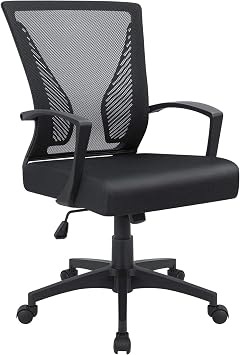
- The 90-Degree Rule: Aim for a chair height where your hips, knees and elbows are all close to 90 degrees, feet flat on the floor.

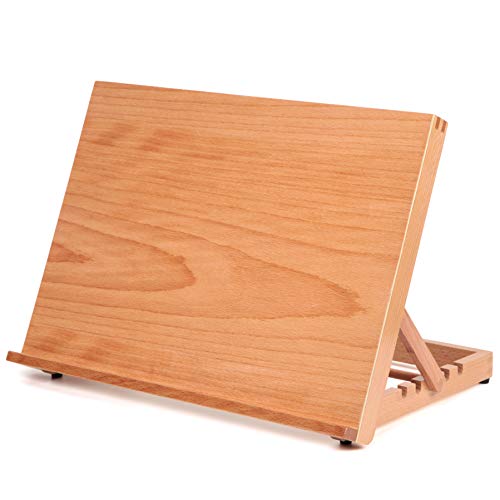
- Lap desks or drawing boards with an adjustable tilt let you bring the page closer without bending your neck as far
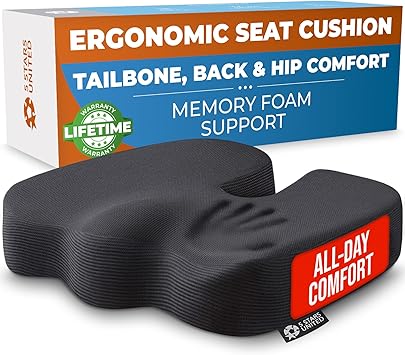
- Support your lower back with a small pillow, rolled towel or lumbar cushion

-
View on Amazon
$35.99$26.59We earn commission if you make a purchase at no additional cost to you. See Disclosure Statement for further details....
11/26/2026 08:43 am GMT -
View on Amazon
$29.99$20.99We earn commission if you make a purchase at no additional cost to you. See Disclosure Statement for further details....
11/26/2026 09:41 am GMT -
View on Amazon
$39.99$27.07We earn commission if you make a purchase at no additional cost to you. See Disclosure Statement for further details....
11/26/2026 08:44 am GMT -
View on Amazon$49.99
We earn commission if you make a purchase at no additional cost to you. See Disclosure Statement for further details....
11/26/2026 09:41 am GMT -
View on Amazon
$34.95$23.70We earn commission if you make a purchase at no additional cost to you. See Disclosure Statement for further details....
11/26/2026 08:43 am GMT


Best Lighting for Coloring That Protects Your Eyes
Start here: a simple path from the problem to a practical solution.
1. Identify the problem
Small details, glare and long periods of close focus can leave eyes feeling tired or dry.
2. Immediate fix
Move your light to reduce shadows and glare; look away from the page for a brief eye break.
3. Practical adjustments
Try larger designs, blink regularly and position the page at a comfortable distance. Persistent blur or headaches warrant an eye examination.
4. Products (only if helpful)
Start by repositioning your existing lamp. Consider an adjustable task light or magnifier only if it solves a specific difficulty; see the optional picks below.
Working with small details and subtle color differences can strain your eyes. Inadequate lighting might force them to work even harder, leading to fatigue, headaches, and difficulty seeing color accurately.
⚠ Warning Signs
- Tired or heavy eyes during or after coloring
- Headaches that start behind the eyes or across the forehead
- Blurred or slightly unfocused vision after a session
✓ Quick Adjustments
- Use an adjustable lamp positioned over your work, ideally a daylight-style LED that shows colors clearly without glare; overhead room lighting creates shadows
- Consider a magnifier or combined magnifying lamp if you have low vision or work with very detailed designs
- If you often squint or struggle to focus at coloring distance, ask an optometrist whether reading glasses or a prescription update would help
- Follow the 20-20-20 rule: every 20 minutes, look at something roughly 20 feet away for 20 seconds to give your eyes a short rest
OttLite and Brightech make craft lamps designed for detail work like coloring. If eye strain or blurred vision continues after adjusting light and taking breaks, arrange an eye examination; the American Academy of Ophthalmology recommends assessment when symptoms persist.
-
View on Amazon
$38.99$21.83We earn commission if you make a purchase at no additional cost to you. See Disclosure Statement for further details....
11/26/2026 08:43 am GMT -
View on Amazon$39.99
We earn commission if you make a purchase at no additional cost to you. See Disclosure Statement for further details....
11/26/2026 09:43 am GMT -
View on Amazon
$18.99$14.43We earn commission if you make a purchase at no additional cost to you. See Disclosure Statement for further details....
11/26/2026 09:40 am GMT -
View on Amazon$18.99
We earn commission if you make a purchase at no additional cost to you. See Disclosure Statement for further details....
11/26/2026 07:45 am GMT


Coloring Fatigue & Burnout
Start here: a simple path from the problem to a practical solution.
1. Identify the problem
Too many color choices, complex designs or pressure to produce a perfect page can make coloring feel like work.
2. Immediate fix
Choose an easy page and limit yourself to five colors. Give yourself permission to stop after a small section.
3. Practical adjustments
Keep an uncomplicated book for tired days, take breaks and leave pages unfinished without guilt.
4. Products (only if helpful)
No purchase is necessary. A timer you already own or a saved color palette may reduce decisions; see the optional tools below.
When Coloring Stops Feeling Relaxing
Perfectionism, comparing your work with other colorists, pressure to “do it right” or the expectation that every session should produce something beautiful can quietly turn a relaxing hobby into a demanding one. The culprit is usually mental load, not the coloring itself.

⚠ Warning Signs
- Feeling frustrated or disappointed with your coloring more often than pleased
- Avoiding coloring because of pressure to “do it well”
- Overthinking every color choice and second-guessing decisions already made
✓ Quick Adjustments
- Set a short time limit before you start (20 to 30 minutes); knowing there’s an end point reduces obligation
- Decide in advance that “good enough” is the goal: not finished, not perfect, just enjoyable
- If you open a book and feel a flicker of dread rather than interest, close it and pick a different one
Tools That Reduce Decision Fatigue When Coloring
These tools reduce the number of decisions a session needs before it can feel enjoyable:
A Visual Timer
A defined end point removes the low-level worry about how long you’ve been at it, and makes it easier to stop before you’re worn out.
A Limited Pencil Set
A simple 12 or 24-color set forces fewer options, less deliberation, and more coloring. If too many choices is your sticking point, Master Color Combinations: Too many color choices shows you how to narrow them down.
Pre-Made Color Palette Cards or Booklets
Choosing a palette before you open the book removes color decisions. Several community members use ColourLovers: search a topic like “garden”, pick a five-color combination you like, find the closest colors in your set and start coloring.
-
View on Amazon$18.99
We earn commission if you make a purchase at no additional cost to you. See Disclosure Statement for further details....
11/26/2026 09:41 am GMT -
View on Amazon
$5.00$3.97We earn commission if you make a purchase at no additional cost to you. See Disclosure Statement for further details....
11/26/2026 09:41 am GMT -
View on Amazon$18.99
We earn commission if you make a purchase at no additional cost to you. See Disclosure Statement for further details....
11/26/2026 09:42 am GMT


Safety & Materials
Start here: a simple path from the problem to a practical solution.
1. Identify the problem
Art supplies differ in their labels, solvents and potential to cause irritation. Alcohol-based markers need particular attention to ventilation.
2. Immediate fix
Check the label and instructions on the product you are using. For alcohol markers, provide fresh-air ventilation and stop if fumes cause symptoms.
3. Practical adjustments
Keep lids on when not in use, avoid blowing pencil dust, wash hands before eating and follow all product-specific warnings.
4. Products (only if helpful)
Safety does not require buying a new kit. Choose appropriately labeled materials for your needs; read what ACMI seals mean before purchasing.
Materials are the other half of adult coloring safety, so here is what to check before you color.
Are My Coloring Supplies Safe to Use?
Most art materials sold for general use today are non-toxic, but check each product’s safety information, keep materials away from food and ventilate the room when using solvent-based markers.
Always look for products with the AP (Approved Product) seal from the Art and Creative Materials Institute (ACMI).

✓ AP Seal: What It Means
The ACMI AP seal identifies art materials evaluated as non-toxic when used as intended. It does not mean every possible use is risk-free; follow the product instructions and age guidance.
⚠ CL (Caution Label) Seal: Read the Warnings
The CL seal indicates that cautionary labeling is needed for safe use. It is not a blanket ban: read and follow the warnings, and consider an alternative if the precautions do not suit your setting.
Are Alcohol Markers Toxic? (Safety, Fumes & Ventilation Tips)
The solvent in most alcohol markers (like Ohuhu (opens in a new tab) or
💡 My Honest Advice
An ordinary recirculating air purifier is not a substitute for fresh-air ventilation. Seek medical advice if headaches, dizziness or irritation persist or are severe.
Coloring Allergies, Pencil Dust, and Sensitivities Explained
If you use soft-core pencils, you’ll notice pigment dust. If you have asthma or dust sensitivities, don’t blow it away; sweep it off with a drafting brush or a soft cloth.
If a product irritates your skin, stop using it, check your other supplies for the AP seal and seek advice if symptoms persist.
Frequently Asked Questions About Coloring for Health & Comfort
Click any question to expand the answer.
Is adult coloring good for anxiety?
Many adults find coloring calming because the focused, repetitive motions can help quiet a busy mind. It is not a medical treatment for anxiety, but some people use it as part of a relaxing self-care routine. For the full explanation, see How Adult Coloring Reduces Stress and Anxiety Naturally.
Can coloring help with arthritis?
Some people with arthritis find short coloring sessions enjoyable, especially with a relaxed grip and suitable tools. Coloring is not a proven arthritis treatment. Stop if it worsens symptoms and ask your occupational therapist or clinician what suits you.
Why do my eyes hurt after coloring?
Eyes can feel tired, dry or sore after focusing on small details under dim or harsh light. That doesn’t mean you’re damaging them, but it suggests your lighting, distance from the page or session length needs adjusting. See Best Lighting for Coloring That Protects Your Eyes for lamp recommendations, and schedule an eye test if you regularly get headaches or blurred vision.
How long should I color between breaks?
There is no universal safe session length. Start with shorter sessions, pause before discomfort builds and change position.
Are coloring supplies safe to use?
Follow the label on each product. The ACMI AP seal identifies materials evaluated as non-toxic for intended use; the CL seal means specific precautions apply. Use solvent-based markers with suitable fresh-air ventilation.
Why do my hands hurt when coloring even without arthritis?
Hand and finger aches are common, especially with narrow-barrel pencils, a tight grip or heavy pressure for strong color. See Why Your Pencils Might Be Causing Hand Fatigue, which is often the cause even without arthritis. If pain persists despite changes, a physiotherapist can identify what’s specific to your grip.
Why do I feel frustrated or stressed when I’m coloring?
Frustration usually comes from a book more complex than you’re comfortable with right now, expectations about how the finished piece should look, or hand or eye strain building unnoticed. Try an easier book, use whichever colors feel right and check whether your hands or eyes are tired before you start. See When Coloring Stops Feeling Relaxing for more.
Is it normal for my neck and back to be sore after coloring?
Neck or back soreness can happen when you stay in one position too long. Try moving the page, adjusting your chair and taking breaks. Persistent or worsening pain deserves professional assessment.
Can coloring help with PTSD?
Small studies of veterans suggest mandala coloring may help some people feel calmer or improve certain short-term measures, but the evidence is limited and does not make coloring a PTSD treatment. It should never replace trauma-focused professional care. Stop if the activity triggers distress. See the PTSD research discussion.
What is adult coloring safety?
Adult coloring safety means setting up your space, tools and routine so you can color without hand pain, eye strain, neck tension or stress. It also covers choosing non-toxic supplies and ventilating when you use alcohol markers.
Want to Learn More About Healthy, Relaxing Coloring?
Health note: This is general hobby guidance, not a diagnosis or treatment plan. Stop an activity that causes pain or other symptoms and seek professional advice for persistent or concerning changes.
- American Art Therapy Association: Coloring isn’t formal art therapy, but the AATA has information about therapeutic creative practices and finding a qualified art therapist.
- Coloring Communities: Join the “Coloring Books for Adults” Facebook group to swap tips and support with other colorists.
- Research on Coloring & Health: If you’re curious about the science, search Google Scholar for “coloring and anxiety reduction”.
More to Explore
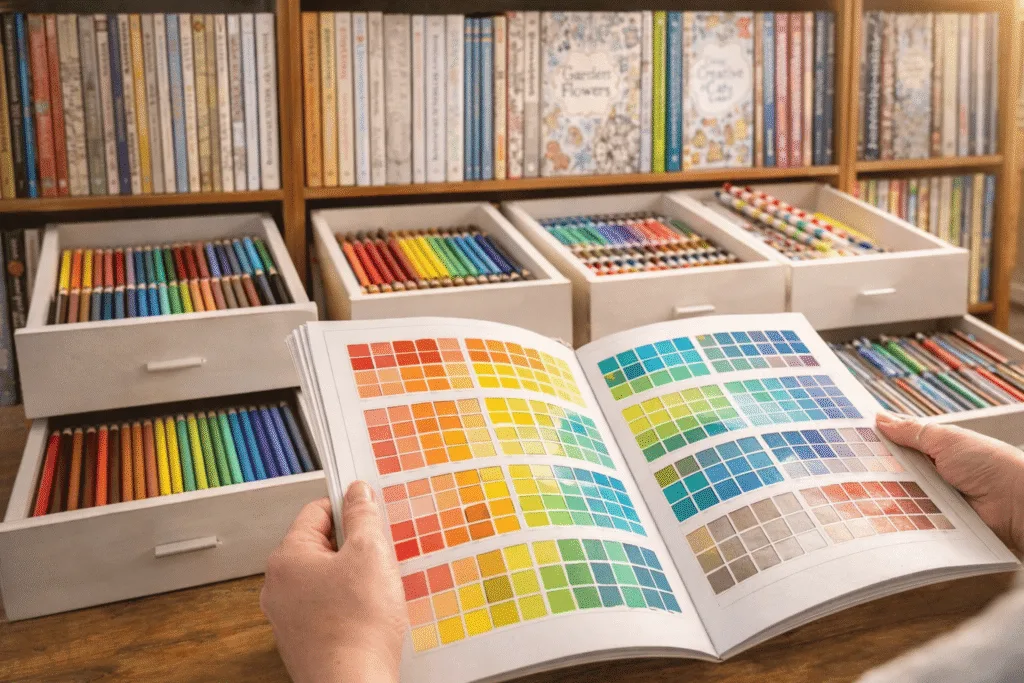
Not sure which pencils or markers to trust? (opens in a new tab)
Pencils, markers, gel pens and more, side by side.

Smudging or heavy pressure on your paper? (opens in a new tab)
The right paper for each medium.

Want a setup that is kinder to your hands? (opens in a new tab)
Sharpeners, cases and comfort extras.

New to coloring and want to start comfortably? (opens in a new tab)
First steps for new colorists.