
How to Tell If a Coloring Book Is AI-Generated Before You Buy It
This isn’t about the pros and cons of AI-generated images. It’s about helping you tell if a book or image has been AI-generated, so you can make an informed decision about whether to spend your money on it.

The preview pages tell you far more than the cover: line weight, anatomy, artist credit and repeated pages catch most AI-generated coloring books in about five minutes.
This checklist won’t catch every AI-generated coloring book, and I’d rather say that upfront than oversell a five-minute check. Some listings are sloppy enough to spot in seconds. Others aren’t, including books that copy or closely imitate a real, named illustrator’s style, sometimes using that illustrator’s name without their knowledge or permission. A credited artist is a genuinely good sign, but on its own it isn’t proof of anything.
Treat what follows as a way to catch the worst offenders and shift the odds in your favour. It won’t guarantee a clean result every time. And it isn’t only an Amazon problem: the same red flags turn up on Etsy, on other marketplaces, and in print-on-demand storefronts generally. A couple of the specific steps below reference Amazon’s “Look Inside” preview by name simply because that’s where most colorists are buying, so look for whatever the equivalent is wherever you shop.
- A real share of coloring book listings, on Amazon and elsewhere, are AI-generated now, and Amazon has tightened its disclosure rules for this through 2026.
- A good cover and a decent star rating don’t tell you what the interior pages actually look like.
- A handful of checks on the preview pages catch a lot of AI-generated listings before you buy, but not all of them. There’s no guarantee here, only better odds.
- A named illustrator is a good sign, but some AI-generated books borrow or copy a real artist’s name and style, so it’s not proof on its own.
- If a page looks fine but something feels a little off, trust that feeling. It’s usually right.
- If you’ve already bought one, there’s a straightforward next step beyond a bad review and moving on.
- Some books already on my shelf pass every check on this list, so you’ve got somewhere to start.
Jump to a section:
Why This Wasn’t a Problem a Few Years Ago
A few years ago, buying a coloring book on Amazon didn’t need a checklist. Most listings came from an actual publisher, or from an independent illustrator whose name you could look up. If the cover looked decent, the inside usually matched it.
- Cheap AI tools changed that. Anyone can now turn a text prompt into fifty coloring pages in an afternoon. Amazon’s self-publishing platform, KDP, saw a spike in these listings, and Amazon has been tightening its rules on undisclosed AI content through 2026. Its KDP content guidelines now require publishers to tell Amazon when a book uses AI-generated images, including the artwork inside it.
- The giveaway is on the inside pages. A nice cover tells you nothing. The problems show up in line weights that don’t hold colour evenly, hands with the wrong number of fingers, and pages that feel copied from each other. The same books turn up on the other online stores colorists use, too.
- This isn’t a case against AI tools. I use plenty myself, and this site uses AI help in places too. The problem is a listing that doesn’t tell you it was generated in an afternoon with nobody checking the hands or whether the pages repeat.
- This page is about your choice. Whether AI art is good or bad is a conversation for another day. This page helps you tell whether a specific book was made that way, so buying it is a decision you make on purpose.
- Nobody knows how many there are. I can’t give you a real figure, and I won’t invent one. But colorists on Reddit and in Facebook coloring groups are swapping tips on spotting them, which usually means the problem is growing.
- Your old shopping habit isn’t enough anymore. Scroll the listing, check the cover and star rating, hit buy: that used to work. The five-minute checklist below is what works now.
How to Spot an AI-Generated Coloring Book: 5 Checks
None of these takes more than a minute, and you can run through all five before you finish reading the listing page.
Actually open the preview: “Look Inside” on Amazon, or whatever your store calls it
Amazon’s “Look Inside” feature usually shows several interior pages as well as the cover. Open it and scroll through everything it gives you before deciding anything else. Buying elsewhere? Look for that store’s own version, a preview button, sample images, a flip-through video, whatever they offer. A cover photo tells you what the seller wants you to see. The preview pages tell you what you’re actually buying. If a listing has no working preview at all, treat that as a red flag in itself.
Check the line weight
Look at the outlines on a couple of different pages. A real illustrator varies the line weight on purpose: thicker lines for the main outlines, thinner ones for interior detail, because that’s what makes a page easy to color and pleasant once it’s filled in. AI-generated pages tend to keep every line close to the same thickness, or vary it in a way that doesn’t follow the shape of the object. Zoom in if you need to.
Look for anatomy and perspective errors
This is the fastest check, and the one the coloring community talks about most. Look closely at hands, faces, and anything with legs. AI-generated art still slips up on the details: an extra finger, a foot that doesn’t sit right on the ground, an animal with legs bent the wrong way. You don’t need to be an artist to catch these. If something looks “off” the way a mirror-written word looks off, trust that.

Check for a named artist, but don’t stop there
Scroll to the book description and the “About the Author” section. A real coloring book almost always credits an illustrator by name, sometimes with a link to their portfolio or Instagram. No artist name anywhere, just a publisher-sounding brand, isn’t proof of anything on its own, but paired with any of the checks above it’s worth weighing. One caution, though: a name alone isn’t a guarantee either. Some AI-generated books borrow or closely copy a real, established illustrator’s name or style without permission, so treat a credited artist as one good sign among several. I like knowing whose work I’m buying anyway, AI question aside.
Check for repeated pages
If the preview shows five or more pages, compare them to each other. AI-generated books sometimes reuse the same base shapes with small variations, because that’s faster than drawing fifty genuinely different scenes. A few similar pages isn’t unusual, every illustrator has a style. What you’re watching for is pages that are really the same drawing with one small detail changed, like the same cat in the same pose with a different flower beside it. One consistent style across genuinely different subjects is normal.
Red Flags to Walk Away From
Any one of the checks above on its own isn’t a reason to close the tab. A few of them stacking up on the same listing is. Here’s when I’d walk away without finishing the preview:
- More than one anatomy error shows up in a five-page preview
- There’s no working “Look Inside” preview and no sample pages anywhere in the listing
- There’s no artist name, no publisher name, and the brand-sounding title changes between the cover and the product title
- The description reads generic and short, with no specific detail about the book’s actual theme
- The price is noticeably lower than every comparable book in the category, and the same seller has dozens of near-identical titles
None of these alone proves a book is AI-generated, and even stacked together they’re not a guarantee, just far better odds than judging on the cover alone. Together, they’re the pattern the coloring community keeps describing when they talk about the ones that turned out to be a disappointment.
“But the Pictures Still Look Fine”
I get why this is a hard sell. If a page looks nice enough to color, does it actually matter how it was made?
Here’s my honest answer: sometimes it doesn’t, and that’s fine. If you found a cheap coloring book with pages you liked, coloured a few, and enjoyed it, nothing here is telling you that you did something wrong.
Where it does matter is what shows up after you’ve already committed to the book:
- Colour that goes on unevenly. Lines that are too thin in places don’t hold colour well.
- A book that falls apart sooner. Nothing was spent on paper stock or binding, and it shows in the spine.
- No artist to follow. If you love the pages, there’s nobody to look up for more of their work.
- Paying for something nobody checked. For a fair number of colorists, that’s reason enough, the same way you might feel differently about a print once you find out it was mass-produced rather than made by an actual artist.
The question that matters is “did anyone actually check this before it went up for sale?” Most of the checks above are really just checking for that.
What matters is knowing what you’re paying for, so the choice is yours before the book arrives.
What to Do If You Already Bought One
If you’re reading this because you’ve already got a book on the shelf you’re now side-eyeing, here’s what’s actually worth doing about it.
- Check the return window first. Most physical books qualify for a standard return, and “the interior doesn’t match what I expected from the listing” is a legitimate reason. You don’t need to feel awkward about it.
- Leave a specific review. “Line art is inconsistent and two pages have the same hand pose with a different scarf” helps the next colorist far more than “disappointed, one star.” Reviews are one of the few signals other shoppers, and Amazon itself, see before a purchase.
- Don’t blame yourself. You’re not bad at picking coloring books. This checklist didn’t widely exist as shopping advice until pretty recently.
Don’t feel obligated to throw it out. A page with a slightly wonky hand still colors in fine if you’re doing it for the relaxation, not the artwork. Plenty of colorists keep an AI-generated book around for practice pages precisely because the mistakes don’t matter for that purpose.
Coloring Books That Already Pass the Check
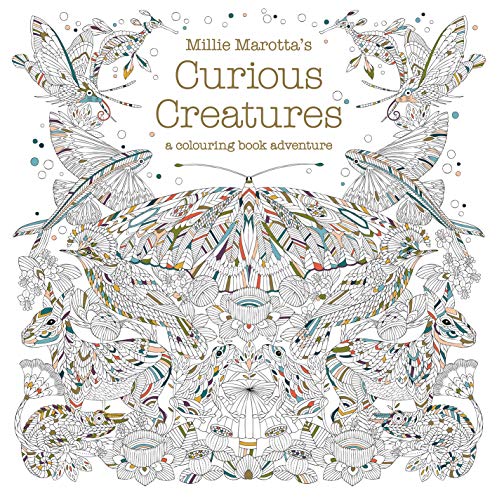
If you’d rather skip the detective work for your next purchase, here are some books already on my shelf that pass every check above: named illustrators, consistent line weight, and pages I’ve actually coloured myself.
-
 View on Amazon$21.75
We earn commission if you make a purchase at no additional cost to you. See Disclosure Statement for further details....
09/26/2026 06:28 am GMT -
View on Amazon$8.95
We earn commission if you make a purchase at no additional cost to you. See Disclosure Statement for further details....
09/26/2026 06:39 am GMT -
View on Amazon
$7.99$6.60We earn commission if you make a purchase at no additional cost to you. See Disclosure Statement for further details....
09/26/2026 06:42 am GMT -
View on Amazon
$16.99$11.79We earn commission if you make a purchase at no additional cost to you. See Disclosure Statement for further details....
09/26/2026 06:54 am GMT


Buying something else?
Run it through the five checks above before you commit: the preview pages, the line weight, the anatomy, the artist credit, and whether the pages repeat themselves. It takes less time than reading this section did.
Frequently Asked Questions
A few quick answers to the questions that come up most when colorists are trying to sort real coloring books from AI-generated ones.
There’s no guaranteed list, but books from illustrators you can name and look up, like Kerby Rosanes, Johanna Basford, or Marjorie Sarnat, come from a real person whose other work you can check against, which is about as close to certain as this gets. See the books above that I’ve personally coloured pages from. Worth knowing: a named artist isn’t a total guarantee either, since AI-generated books occasionally borrow or copy a real illustrator’s name, so it’s still worth a glance at the preview pages even for a credited book.
There’s no single foolproof sign of an AI-generated coloring book, but stacking a few checks together gets you most of the way there: line weight consistency, anatomy and perspective errors, whether an artist is credited, and whether pages repeat themselves. See the full checklist above.
Honestly, you mostly can’t from the cover alone, and that’s the point of this page. Publishers know the cover sells the book, so even a fully AI-generated interior often gets a carefully chosen cover image. Judge the book by its preview pages.
Not automatically. Plenty of cheap coloring books have always had rough production values, AI or not. What matters more is whether the listing is honest about it and whether the pages actually work for coloring: consistent lines, no anatomy errors, and paper that holds up.
Check the return window first, most physical books qualify. If you’re past it, leave a specific review describing what’s actually wrong. A low star rating with no detail doesn’t help the next buyer. See What to Do If You Already Bought One above.
AI image generators are still inconsistent with hands, feet, and how limbs connect to a body, especially across a whole book of similar poses. A human illustrator makes occasional mistakes too, but not the specific, repeating kind AI tools tend to produce, like an extra finger or a foot that doesn’t sit on the ground correctly.
On its own, not really, some legitimate small publishers are light on author bios. Paired with inconsistent line weight or anatomy errors in the preview, missing credit is one more data point to weigh.
Sometimes nothing, and I say that plainly above. Where it tends to bite you is paper and line quality that doesn’t hold colour evenly, no artist to look up if you want more of their work, and just knowing what you actually paid for. Whether that matters to you is a genuinely personal call.
Ready to shop smarter?
Bookmark this page, or better yet, run through the five checks the next time a coloring book listing catches your eye. It gets faster every time you do it.
Want more buying guides and product picks like this one? Check out our Books hub for everything else worth knowing before you buy.
Happy coloring,
Suzy
Want new buying guides sent your way as they go live? Sign up and I’ll keep you posted.
Stay Updated with Latest Tips and Products →