
Enjoy Adult Coloring for Longer with Pain-Free Sessions

Sore hands. Stiff neck. Tired eyes. Sound familiar? These are colorists most common coloring complaints that are nearly all avoidable.
The good news? In most cases, it’s not coloring itself causing the discomfort, it’s how you’re set up, the tools you’re using, and how long you’re going without a break.
This page is your quick-fix guide. Use it to identify what’s going wrong and make simple adjustments so that you can get back to comfortable, enjoyable coloring faster.
Why Coloring Can Cause Discomfort
While it might seem unbelievable, you can actually get coloring related injuries. And no, I’m not just talking about the odd paper cut. Colorists often spend hours sitting in one position, hunched over a desk or clipboard, making the same movements with their hands and arms over and over again.
Most coloring discomfort comes from setup rather than coloring itself. Adjusting your workspace is often more effective than stopping coloring altogether.
Here’s what typically builds discomfort during coloring sessions:
- Still posture — sitting in one position for too long strains the neck, shoulders, and back
- Repetitive motion — repeated pencil strokes and grip pressure fatigue hands and wrists
- Eye focus — staring at fine details under poor lighting strains your eyes
- Long sessions — concentration fatigue creeps up without you noticing
The reassuring thing is that most discomfort has nothing to do with coloring itself, it comes from setup and habits. Small adjustments to how you sit, what tools you use, and how often you take breaks can make a big improvement to your adult coloring health.
Eye Strain & Visual Fatigue
Why Eye Strain Happens
Adult coloring involves focusing on fine details for extended periods — small sections, tight patterns, and colour-matching decisions. This kind of sustained close-up focus is more demanding than casual reading. Add low light, high contrast patterns, or late-night coloring sessions, and your eyes are working hard without you realising it.
Warning Signs
- Tired or heavy eyes during or after coloring
- Headaches that start behind the eyes or across the forehead
- Squinting to see fine details
- Blurred or slightly unfocused vision after a session
- Dry or watery eyes from reduced blinking
Quick Comfort Adjustments
- Improve your lighting — a dedicated daylight lamp reduces contrast strain significantly
- Use the 20-20-20 rule: every 20 minutes, look at something 20 feet away for 20 seconds
- Increase text or pattern size where possible — magnifying tools help
- Avoid coloring in dim or warm yellow lighting
Helpful Tools
-
 View on Amazon
$38.99$27.99We earn commission if you make a purchase at no additional cost to you. See Disclosure Statement for further details....
05/01/2026 09:02 am GMT -
 View on Amazon$39.99
We earn commission if you make a purchase at no additional cost to you. See Disclosure Statement for further details....
05/01/2026 09:02 am GMT
Hand & Wrist Pain
Why Hand Strain Happens
Coloring involves hundreds of small, repetitive movements — short pencil strokes, grip pressure, and frequent tool changes. These are minor individually, but over a long session they add up. A too-tight grip (which most colorists default to without noticing) is one of the biggest contributors to hand fatigue and wrist soreness.
Colorists with arthritis, hypermobility, or prior hand/wrist injuries tend to notice this more quickly, but it can affect anyone during longer sessions.
Warning Signs
- Finger cramps during or after coloring
- Aching wrist or forearm after a long session
- A tight, tired grip that’s hard to relax
- Numbness or tingling in fingers
- Stiffness in knuckles after extended use
Quick Comfort Adjustments
- Consciously loosen your grip — hold the pencil with the same pressure you’d use to hold a feather
- Rotate through different tools during a session (pencils, gel pens, markers) to vary hand position
- Take 2–3 minute stretch breaks every 30–45 minutes — open and close the hand fully
- Try pencil grips or cushioned holders to reduce the pressure needed
Helpful Tools
-
 View on Amazon$6.98
We earn commission if you make a purchase at no additional cost to you. See Disclosure Statement for further details....
05/01/2026 08:05 am GMT -
 View on Amazon$15.00
We earn commission if you make a purchase at no additional cost to you. See Disclosure Statement for further details....
05/01/2026 09:01 am GMT -
 View on Amazon
$13.46$10.41We earn commission if you make a purchase at no additional cost to you. See Disclosure Statement for further details....
05/02/2026 06:07 am GMT -
 View on Amazon
$35.99$30.49We earn commission if you make a purchase at no additional cost to you. See Disclosure Statement for further details....
05/01/2026 09:01 am GMT -
 View on Amazon$9.99
We earn commission if you make a purchase at no additional cost to you. See Disclosure Statement for further details....
05/01/2026 09:01 am GMT
Neck, Shoulder & Back Strain
Why Posture Strain Happens
Most colorists work at a flat surface — a table, desk, or lap. This creates a natural tendency to lean forward and look down. Over time, this bends the neck forward, rounds the upper back, and tightens the shoulder muscles. You might not feel it during a session, but 20 minutes after you stop, the stiffness shows up.
Coloring on a flat surface also means your arms and wrists angle downward, which can add strain to both. Raising the drawing surface — even slightly — changes everything.
Warning Signs
- Stiff neck after coloring, especially at the base of the skull
- Aching between the shoulder blades
- Upper back tension or tightness
- Lower back discomfort, especially when coloring at a desk
- Shoulder tension that lingers into the evening
Quick Comfort Adjustments
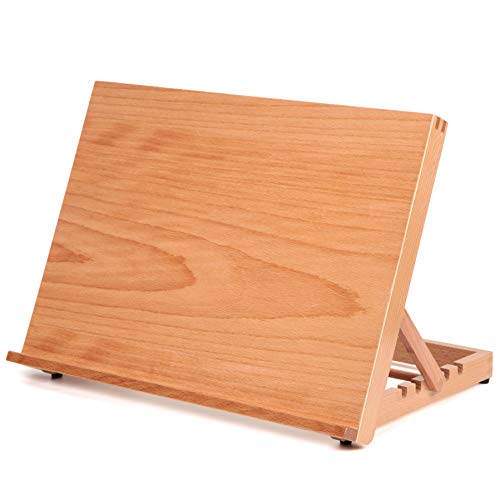
- Raise your drawing surface — a lap desk, drawing board, or desktop easel brings the page closer to eye level
- Check your chair height — elbows should be roughly level with the table surface
- Sit back in your chair rather than perching forward
- Roll your shoulders back gently before and during sessions
Helpful Tools
-
 View on Amazon
$35.99$29.87We earn commission if you make a purchase at no additional cost to you. See Disclosure Statement for further details....
05/01/2026 09:01 am GMT -
 View on Amazon
$32.99$25.96We earn commission if you make a purchase at no additional cost to you. See Disclosure Statement for further details....
05/01/2026 09:01 am GMT -
 View on Amazon$43.99
We earn commission if you make a purchase at no additional cost to you. See Disclosure Statement for further details....
05/01/2026 09:02 am GMT
Tired, Fatigued and Lost Concentration
Why Fatigue Happens
Coloring is absorbing — that’s the whole point. But absorption is a form of concentration, and sustained concentration depletes mental and physical energy faster than you’d expect. Long sessions combine sustained visual focus, repetitive movement, and held body positions, which means fatigue can build across multiple systems at once.
Many colorists push through the warning signs — ‘just one more section’ — which is fine occasionally, but as a habit it can leave you feeling drained, stiff, and less enthusiastic about your next session.
Warning Signs
- Difficulty concentrating or staying focused on details
- Irritability or frustration with minor mistakes
- Physical heaviness — hands, eyes, or neck feeling unusually tired
- Decreased enjoyment mid-session compared to the start
- Exhaustion that persists after the session ends
Quick Comfort Adjustments
- Set a gentle timer — 45–60 minute session limits work well for most colorists
- Build in short breaks (5 minutes) every 30–45 minutes — stand, stretch, look away
- Vary your activity within a session — switch between detail work and background areas
- Stop before you’re exhausted rather than after — it makes the next session more enjoyable
Helpful Tools
Simple tools that help with session management:
-
 View on Amazon$18.99
We earn commission if you make a purchase at no additional cost to you. See Disclosure Statement for further details....
05/01/2026 09:02 am GMT -
View on Amazon$39.99
We earn commission if you make a purchase at no additional cost to you. See Disclosure Statement for further details....
05/01/2026 09:02 am GMT
Coloring is Stressful and Not Relaxing
When Coloring Stops Feeling Relaxing
Most of us picked up coloring because we wanted to switch off. So when it starts feeling like work, or worse, stressful, then you start to avoid coloring.
Usually it’s one of a few things. Maybe you’ve started a page that’s more intricate than you felt like tackling that day. Maybe you’re fixating on a section that didn’t go the way you wanted. Maybe you sat down tired and distracted, and now you’re annoyed at yourself for not enjoying it.
The simplest fix is also the least satisfying to hear – try something simple for a while. Pick a page you don’t care too much about. Use three colors instead of twelve. Color a small corner of something and stop when you feel like stopping. The goal isn’t a finished page, it’s ten minutes where your brain had somewhere calm to be.
If coloring consistently feels stressful rather than soothing, it’s also worth checking whether something physical is getting in the way. Uncomfortable seating, poor lighting, or hand fatigue can make a session feel draining before you’ve even noticed why. Do a quick check on the other sections on this page before you conclude that coloring just isn’t for you.
Warning Signs
- Difficulty concentrating or staying focused on details
- Irritability or frustration with minor mistakes
- Physical heaviness as your hands, eyes, or neck feel unusually tired
- Decreased enjoyment mid-session compared to the start
- Exhaustion that persists after the session ends
- Considering giving coloring up
Quick Comfort Adjustments
- Step away from coloring communities if comparison is making sessions feel worse, not better
- Choose coloring books you genuinely like rather than impressive ones as your enjoyment matters more than the complexity
- Give yourself permission to leave sections unfinished
- Color for 15 minutes with no expectations just relax and colour
Helpful Tools
-
 View on Amazon$9.99
We earn commission if you make a purchase at no additional cost to you. See Disclosure Statement for further details....
05/01/2026 09:02 am GMT -
 View on Amazon
$9.99$7.99We earn commission if you make a purchase at no additional cost to you. See Disclosure Statement for further details....
05/01/2026 09:02 am GMT -
 View on Amazon
$9.95$8.75We earn commission if you make a purchase at no additional cost to you. See Disclosure Statement for further details....
05/01/2026 09:05 am GMT
Quick Comfort Tips
Whatever type of discomfort you’re dealing with, a few principles apply across every health area. Think of these as the foundation — the habits that support everything else:
* Take breaks before you’re already sore or tired
* Adjust your lighting before you start coloring
* Relax your pencil grip
* Ever hour shift position, stretch, and stand up briefly
* Listen to your body. If it feels uncomfortable, change it.